General liability is mainly about third-party claims
General liability is about third-party claims: a customer, visitor, vendor or neighbor says your business, your work or your products hurt them or damaged their property. The policy may help pay for your legal defense and for covered damages, up to the policy’s limits.
Just as important is what it is generally not designed to cover. These usually belong to other coverages:
- Damage to your own building or equipment
- Usually handled by commercial property coverage.
- Injuries to your own employees
- Usually handled by workers’ compensation.
- Accidents involving vehicles
- Usually handled by commercial auto coverage.
- Mistakes in professional advice or services
- Often addressed by separate professional liability coverage. Ask an agent whether that applies to your business.
Where businesses actually run into it
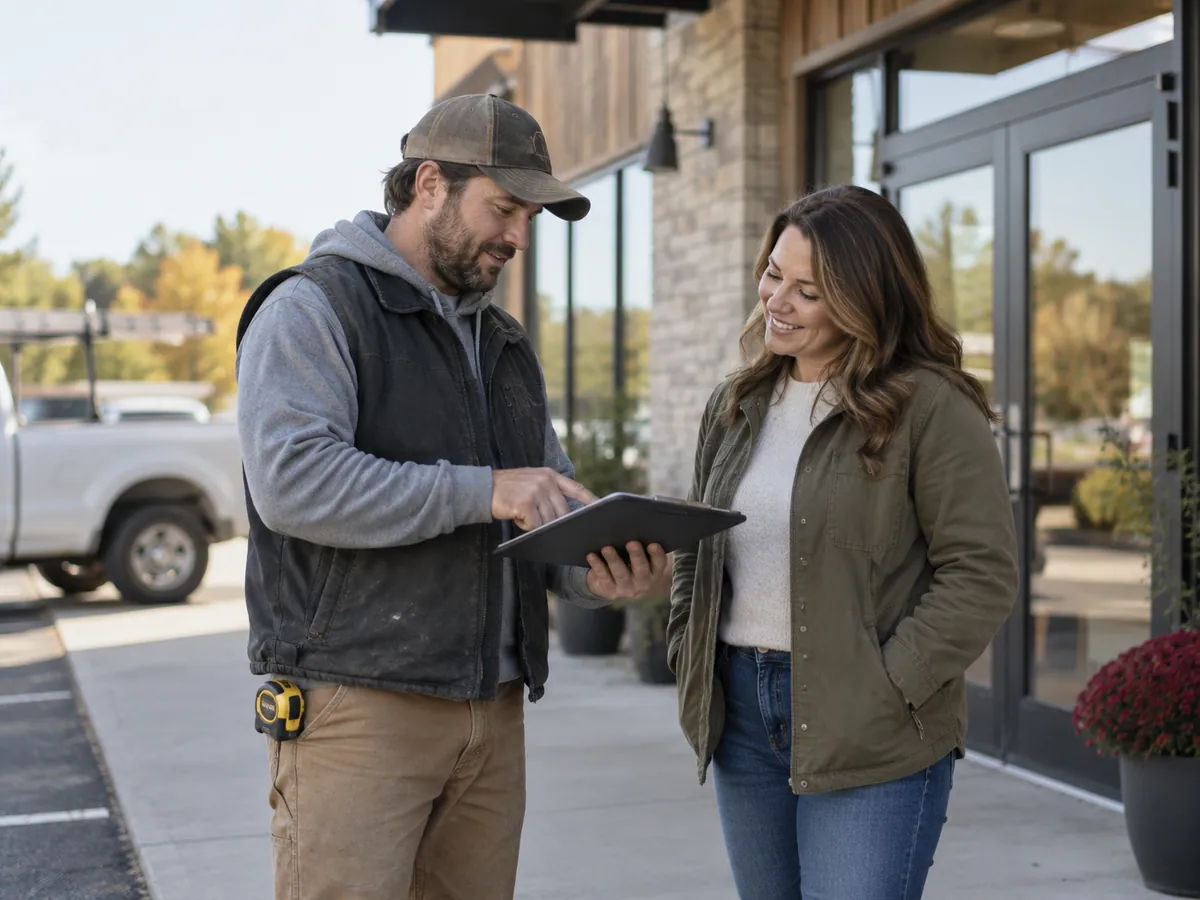
- A customer is hurt on your premises. A slip on a wet floor or a fall on a walkway can lead to a claim.
- Your work damages someone else’s property. A job at a client’s location can go wrong.
- A landlord asks for it. Many commercial leases list required coverages and limits.
- A customer or vendor contract asks for it. Some won’t start work without proof of insurance.
Not every lease or contract requires it, and each one words its requirements differently. Read yours before you assume.
When somebody asks for a certificate of insurance
A certificate of insurance (COI) is a document that summarizes the coverage you carry: the type, the policy period and the limits. Landlords, clients, general contractors and event venues commonly ask for one before they’ll work with you.
Two things to check first
- Whether the request asks to be named as an additional insured, which is a separate request from the certificate itself.
- Which limits the lease or contract requires, so the coverage you buy matches.
If you need a certificate, tell us who’s asking and what the document says. Ask an agent how certificate requests are handled for your policy.
What to think about before you buy
- Limits
- Policies typically have a limit per occurrence and an overall aggregate limit. Your lease or contract may set a minimum.
- Deductible or retention
- The amount you may pay before the policy responds. Ask how it applies to claims and defense costs.
- Exclusions
- What the policy doesn’t cover. Exclusions differ by policy and are worth reading, not skipping.
- How your operations are described
- The policy is written around what your business does. If your services change, the description may need to change too.
- Additional insured requirements
- If a landlord or client must be listed, confirm the policy can do that.
Good moments to talk with an agent
- You’re signing a new lease or contract that mentions insurance
- You’re adding a service, product or location
- A client asks for a certificate or additional insured status
- You’re expanding into work you haven’t done before
- Your renewal is coming up and the price or terms changed
What helps start a quote
- Business name, address and a description of your operations
- Estimated annual revenue and, if relevant, payroll
- Number of locations
- Any lease or contract insurance requirements (bring the document)
- Your current policy’s expiration date and any prior claims history
Common questions
Does general liability cover my employees if they’re hurt on the job?
Generally no. Employee injuries are what workers’ compensation is designed for. General liability is aimed at claims from people outside your business.
Is general liability required by law in Michigan?
It isn’t the same kind of legal mandate as no-fault auto insurance or workers’ compensation. In practice it’s most often required by leases, contracts or lenders. Whether it’s required for your situation depends on those documents and on any licensing rules that apply to your business.
What is a certificate of insurance?
A summary document showing the coverage you carry, who insures you, the policy dates and the limits. It’s commonly requested by landlords and clients.
Does it cover damage to my own equipment or building?
Generally not. That’s typically the job of commercial property coverage.
What decides the cost?
Insurance carriers typically look at factors such as the nature of your operations, size, location, coverage limits and claims history. An agent can explain what applies to your quote.